
THURSDAY, August 27, 2026|
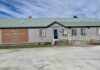
Photo – MHCC – Bigfoot99 file photo
Officials said the county’s two hospitals received federal healthcare funding, while the ambulance services did not.
In 2025, the Trump administration created the Rural Health Transformation Program, allocating $50 billion over five years to stabilize, modernize, and expand healthcare in rural communities. Wyoming received $205 million in the program’s first year.
Carbon County Commissioner Sue Jones serves on the Wyoming Rural Health Transformation Advisory Committee, which is responsible for distributing the state’s share of the federal funding. During Tuesday’s Board of Commissioners meeting in Saratoga, Commissioner Jones announced that she and the other members of the Rural Health Transformation Committee met for the first time on August 11th in Casper, where they disbursed the entire $205 million. She said the medical centers in Saratoga and Rawlins both received a portion of that federal funding.
Commissioner Jones added that she abstained from all votes pertaining to Carbon County.
Two of the county’s three independent ambulance services, Memorial Hospital of Carbon County EMS and South Central Wyoming EMS, applied for Rural Health Transformation funding. Little Snake River Valley EMS did not request any financial support. Commissioner Jones said the federal government is pushing to consolidate regional medical transport providers under one umbrella, but the process will be difficult.
Commissioner Jones said the lack of a plan to unify service led to several ambulance providers being denied federal funding, including South Central Wyoming EMS, Memorial Hospital of Carbon County EMS, and Saratoga’s North Platte Valley Medical Center, which had attempted to partner with SCWEMS to establish a combined ambulance service.
Speaking at the August 19th Saratoga Town Council meeting, North Platte Valley Medical Center Board of Directors Chairman Will Faust said his organization and SCWEMS had submitted a joint Rural Health Transformation funding request for $1.25 million. However, Faust said he later learned that the ambulance service also filed its own separate application, which caused their joint request to be denied.
Faust said the SCWEMS Board of Directors should have worked more closely with the North Platte Valley board to improve their chances of receiving federal funding. He added that hospital administrators were disappointed by the outcome.
Faust said the Rural Health Transformation funding denial will have a negative impact on the community. The money was going to be used to increase volunteer staffing for SCWEMS, which is responsible for transporting patients from Saratoga to other hospitals for additional care. Without increased cooperation from the SCWEMS board of directors, Faust said patients are in danger.
Faust also reported that the Saratoga medical center received $1.75 million in Rural Health Transformation funding through its separate application.
At the August 25th Board of Carbon County Commissioners meeting, Commissioner Sue Jones said the Wyoming Rural Health Transformation Advisory Committee chose to fund organizations that provided long‑term plans for the money. Should those plans not hold up, she said the funding will be returned to the state.
Because of that requirement, Commissioner Jones said there is likely to be more Rural Health Transformation money available for next year’s funding cycle.
Despite the influx of federal money, Jones said Wyoming is still struggling to pay for basic services, such as water and sewer repairs. She said the state must find additional ways to increase revenue, or it won’t succeed.
Likewise, Commissioner Jones said the state’s healthcare facilities must also find ways to attract more providers to live in Wyoming’s rural comminutes; otherwise, residents will continue to be forced to travel for basic medical care.
The Wyoming Rural Health Transformation Advisory Committee will meet again in early November, when members will sit down with representatives from the Centers for Medicare & Medicaid Services to discuss alternative ways to meet the state’s medical needs.