

TUESDAY, October 13, 2026|
Photo – Seminoe Dam – Bigfoot99 file photo
A national environmental nonprofit organization and the City of Casper are requesting additional water studies before the Federal Energy Regulatory Commission issues its final ruling on the Seminoe Pumped Storage Project.
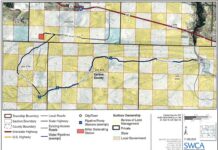
On September 11th, just six days before it was set to approve or deny the Seminoe Pumped Storage Project’s hydroelectric license, the Federal Energy Regulatory Commission, or FERC, filed a notice of intent to prepare a supplemental Environmental Impact Statement in conjunction with the Bureau of Land Management. The additional studies are needed for BLM to consider amendments to the Rawlins Resource Management Plan, which are needed to allow construction on BLM‑managed land, change the visual character of Seminoe Reservoir, and disturb the Seminoe-Ferris bighorn sheep herd. The Bureau of Land Management must also determine if its current management policies even allow for a pumped storage facility at Seminoe Reservoir.
As part of preparing the supplemental Environmental Impact Statement, FERC opened a new public comment period, which ends today, October 13th.
Last week, Bigfoot99 and The Bandit102 reported that the Board of Carbon County Commissioners was preparing to submit an official comment to the Federal Energy Regulatory Commission criticizing how the agency conducted its previous environmental reviews of the Seminoe Pumped Storage Project. At the time, Deputy County Attorney Ashley Davis noted that no other governmental entities had submitted comments on the project, attributing the lack of participation to those entities waiting until closer to the October 13th deadline.
It appears that Deputy County Attorney Davis was correct, as on Thursday, October 8th, the Washington D.C.-based clean‑water advocacy group American Rivers filed scoping comments for the Seminoe Pumped Storage Project. Its key concern is the effect low water temperatures may have on the ecosystem downstream of Seminoe Reservoir. Specifically, American Rivers wrote, “The potential for the proposed pumped-storage project to cause or contribute to exceedances of temperature standards downstream within the Blue-Ribbon trout fishery known as the Miracle Mile, particularly when Seminoe Reservoir is low, is of particular concern.”
Specifically, American Rivers criticized the fact that FERC used decade‑old information, from 2013 to 2016, when conducting its temperature and water‑quality modeling. The data showed that in the summer of 2013, Seminoe Reservoir dropped to 6,305 feet. At that level, the group said FERC’s model showed temperature increases above the Wyoming Department of Environmental Quality’s 1.1‑degree Celsius limit, or roughly two degrees Fahrenheit, in both the Seminoe Reservoir and the downstream Miracle Mile trout fishery. However, the project’s DEQ water‑quality certification only requires power generation operations to pause when levels drop an additional 15 feet, to an elevation of 6,290.
American Rivers also noted that Seminoe fell below 6,305 feet in 28 of the last 80 years and urged FERC and the Bureau of Land Management to examine temperature effects when the facility is operating between that elevation and the 6,290‑foot cutoff. While the Bureau of Land Management’s jurisdiction doesn’t cover the Miracle Mile, the group urged BLM to weigh the project’s impact on the trout fishery when evaluating a possible amendment to the Rawlins Resource Management Plan.
On the following day, October 9th, the City of Casper outlined its objections to the Seminoe Pumped Storage Project. In Resolution 26-247, the Casper City Council wrote that, “the facility could negatively affect the water quality, water temperature, aquatic habitat, fisheries, wildlife, recreation, and socioeconomic resources, particularly the Miracle Mile and broader North Platte River fishery, which are important recreational and economic resources for the City of Casper and Natrona County.”
Casper officials also raised concerns that changes to water temperature, chemistry, and turbidity could impair operations at the Central Wyoming Regional Water Treatment Plant and the Sam H. Hobbs Regional Wastewater Treatment Plant, which would impact 74,500 residents. The City Council asked FERC and all applicable federal agencies to fully evaluate the effects the pumped storage facility may have on the Miracle Mile and local bighorn sheep habitat during its supplemental Environmental Impact Statement.
As of yesterday afternoon, 24 private citizens have submitted public comments alongside American Rivers and the City of Casper since FERC announced its plan to prepare a supplemental Environmental Impact Statement. All opposed the project.
The Federal Energy Regulatory Commission is now expected to issue its final decision on the Seminoe Pumped Storage Project on October 21st, 2027.