

MONDAY, August 17, 2026|
Photo – Birchall’s mourning dress – Courtesy Hanna Basin Museum
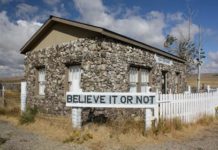
The Hanna Basin Museum unveiled a new exhibit on prominent resident Edith Birchall.
On Saturday afternoon, Hanna Basin Museum Director Haley Clark debuted the museum’s newest exhibit. Clark explained that the display focuses on the impact the mines had on the residents of Hanna, and specifically Edith Birchall.
Called one of Carbon County’s most resilient women by the Lander‑based website VisitUSAParks.com, Edith Birchall was born in Lancashire, England in 1887. In 1906, at the age of 18, she immigrated to Carbon County with her father, Henry George, and brother, Andrew. The next year, her two uncles, John and Andrew Hoy, followed them to Hanna to seek work in the mines.
Around three o’clock on the afternoon of March 28th, 1908, the Birchall family was playing dominoes in their Hanna home when an explosion rocked the town. An underground fire triggered the blast, trapping 20 miners in the tunnels.
Edith Birchall’s father, brother, and two uncles rushed to the No. 1 mine to help with rescue and recovery efforts while she stayed home to prepare dinner. Seven hours later, at 10:30 p.m., a second explosion tore through the mine, killing 41 rescue workers, including all four Birchall men.
In the April 16th, 1908, edition of the Laramie Republican newspaper, Birchall is quoted as saying, “My men folks, four of them, all went to the mine when the explosion came and got to work. I stayed home and cooked supper. I waited until 1 o’clock the next morning for them to come and then learned that they had been killed.”
In total, the two 1908 explosions killed 59 miners. The blasts caused catastrophic cave‑ins that sealed the mine, and the bodies of 28 victims were never recovered.
While not as deadly as the 1903 coal‑gas explosion that killed 169 miners, recognized as the worst mine disaster in Wyoming, the 1908 blast left 20-year-old Edith Birchall all alone.
Instead of returning to England, Birchall chose to stay in Hanna. In the same newspaper, she said, “…in England I did housework all day long, and the washing, too, and only made what in United States money would be 75 cents a week.” She earned $1.25 a week performing the same duties in Hanna.
Later in 1908, Birchall married Carl Erickson, and together they raised his daughter, Margaret, along with three children of their own, Ruth, Lena, and Carl Jr. After 43 years of working in the Hanna coal mines, Carl Erickson died in 1949 at the age of 79. Birchall, then known as Edith Erickson, died in 1967, also at the age of 79.
Using grants provided to celebrate the 250th anniversary of the signing of the Declaration of Independence, Hanna Basin Museum Director Haley Clark was able to put together the new Edith Birchall exhibit in the former Crawford home, known as House 11. Clark described the display, which includes Birchall’s black mourning dress and the dominoes the family was playing on that fateful March afternoon.
Birchall’s mourning dress was already part of the Hanna Museum’s collection, having been donated to the institution by her family many years ago.
Museum Director Clark also transformed an adjoining closet into a mine entrance, with a television playing a short documentary on coal mining in northern Carbon County narrated by local historian Nancy Anderson.
Clark, who also teaches at Hanna Elementary School, said she spent her summer working on the Edith Birchall exhibit, often staying at the museum through the night. She said she wanted to ensure the project honors Birchall and her descendants.
View the new Edith Bichall exhibit at the Hanna Basin Museum, located at 502 Front Street in Hanna.